
Strength improves through repeated, appropriately challenging practice. The difficult part for many people is not finding an exercise. It is turning hundreds of possible exercises into a plan they can follow for months.
What to look for in a strength training app
Structured weekly training
The app should connect individual workouts into a schedule, explain the purpose of each session and make rest days visible.
Clear exercise videos
Demonstrations should show setup, movement and control, not just a fast clip with no explanation.
Progression guidance
Users need practical direction for increasing weight, repetitions, sets or movement difficulty.
Exercise alternatives
A good plan offers substitutions for equipment, experience and comfortable range of motion without turning every workout into guesswork.
Useful tracking
Workout history should help users repeat and progress their training rather than reward activity for its own sake.
Recovery context
Training load, soreness, mobility, sleep and stress affect performance. The plan should leave room to adjust.
Strength training for different starting points
New to strength training
Begin with repeatable full-body sessions and a small number of movements. Learn how to squat, hinge, push, pull, carry and stabilize using variations appropriate for your experience.
Returning after time away
Do less than you remember being capable of. Previous experience can return faster than brand-new skill, but joints, connective tissue and work capacity still need time to readapt.
Experienced lifters
More experienced users may need flexible exercise selection, detailed load tracking and enough control to adjust volume. A rigid beginner plan can become limiting even if its individual workouts are good.
Example beginner weekly strength plan
This example shows structure, not an individualized prescription.
Full Body A
Squat pattern, horizontal push, row, hip hinge and carry. Keep the first week deliberately manageable.
Recovery
Easy walking, breathing and a short mobility routine for areas that feel stiff.
Full Body B
Split squat or step-up, overhead or angled push, pull, glute-focused movement and trunk control.
Optional Movement
Recreational activity, an easy conditioning session or recovery based on energy and goals.
Two consistent sessions are more valuable than an ambitious five-day plan that repeatedly collapses. Add training only when the current schedule is sustainable.
How to progress without rushing
Progressive overload means gradually asking the body to do more. It does not mean adding weight every workout regardless of technique or recovery.
- Repeat the same movement long enough to learn it.
- Complete the target repetitions with controlled technique.
- Increase one variable at a time: load, repetitions, sets, range or exercise difficulty.
- Use small increases rather than dramatic jumps.
- Reduce volume when fatigue is accumulating faster than recovery.
See the exercise, then do the work
Watch the demonstration before the working set. Identify the starting position, direction of movement and finishing position. Then use an appropriate load and compare how the movement feels, not only how it looks.
Play the demos right here.
Start with three foundational movements. The videos stay on the page so you can review a movement, pause it and get back to your workout.
A video cannot determine whether pain is safe or identify an injury. Stop when a movement causes sharp, worsening or unusual symptoms and seek appropriate professional guidance.
How Everyone’s an Athlete approaches training
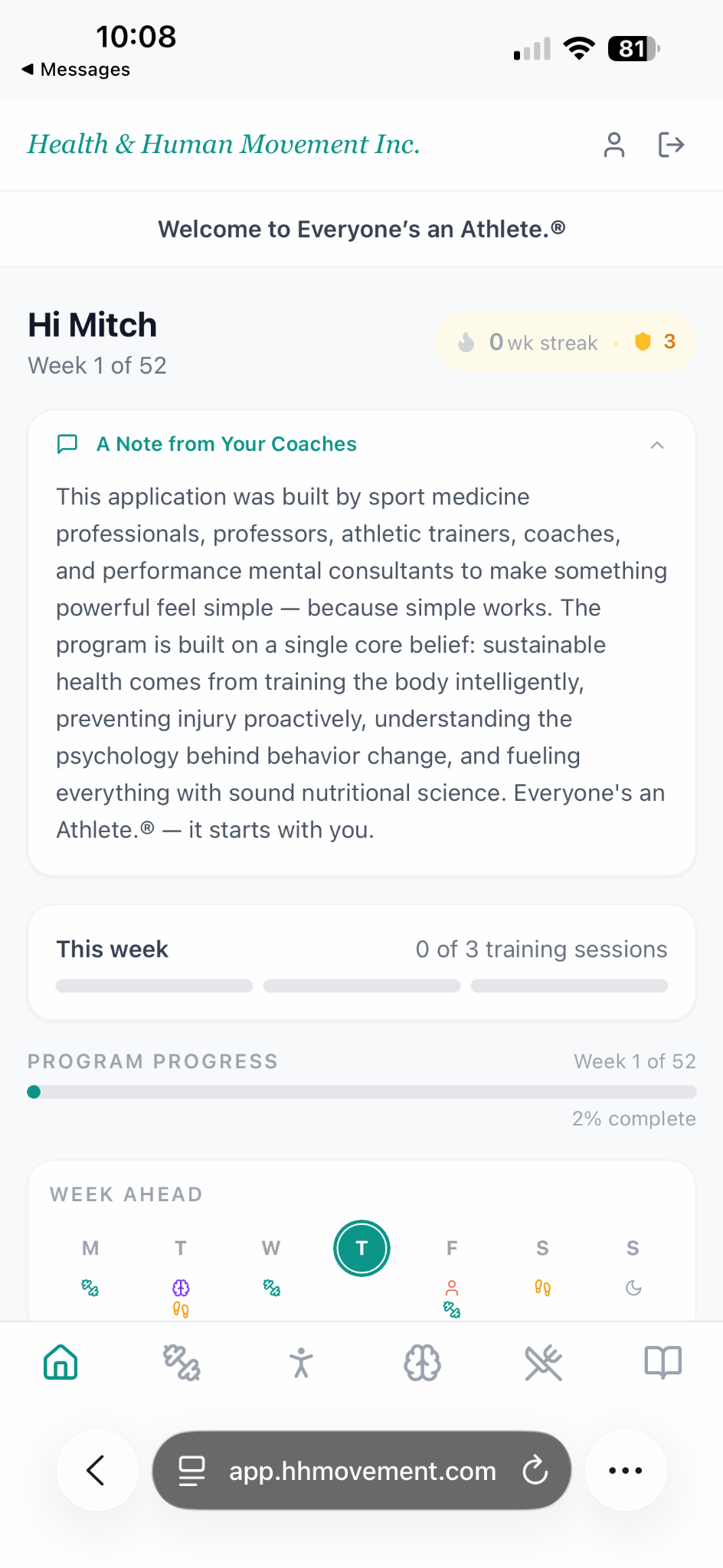
Everyone’s an Athlete is being built to connect guided strength work with mobility and recovery, mental performance and nutrition and wellness. That matters because a training plan does not exist separately from the person performing it.
Common questions
What should a strength training app include?
Look for clear exercise demonstrations, structured weekly plans, progression guidance, easier and harder options, workout history and realistic recovery expectations. More exercises do not automatically make an app more useful.
Can beginners use a weightlifting app?
Yes, if the app explains technique, starts with manageable volume and gives users a way to adjust exercises and resistance. Beginners should prioritize movement quality and consistency over testing maximum strength.
How many days per week should a beginner strength train?
Many beginners can make progress with two or three full-body sessions each week. The appropriate schedule depends on experience, goals, other activity, recovery and health circumstances.
Do I need a full gym?
No. Useful programs can be built around bodyweight, resistance bands, dumbbells or a complete gym. The app should make equipment requirements clear before a workout begins.
Can an app replace a personal trainer?
An app can provide structure and demonstrations, but it cannot fully observe technique, diagnose pain or make every individual adjustment. Some users benefit from in-person coaching, especially when learning complex lifts or returning from injury.
Keep building sustainable health.
Explore more practical guides now, or follow the app as it moves toward launch.
Educational content only. This page does not replace individualized medical, nutrition, mental-health or workplace-safety advice.